Designing for Learner Variability: Reflections on a Recent Learning Experience – Post #3
A recent learning experience that stood out to me was an online university course that relied heavily on long recorded lectures and timed quizzes. The course seemed to assume that all students learn best by listening to information for extended periods and then demonstrating understanding under strict time limits. This design reflected the idea of an “average learner,” where everyone is expected to process information in the same way and at the same pace. However, in reality, learners vary greatly in their attention span, language background, prior knowledge, technology access, and learning preferences.
If I were redesigning this course using Universal Design for Learning (UDL) principles, I would first provide multiple means of representation. Instead of only offering recorded lectures, I would include written summaries, transcripts, visual diagrams, and short concept videos so students could choose the format that helps them learn most effectively. The CAST UDL Guidelines explain that learners differ in how they perceive and comprehend information, so providing options increases accessibility and understanding (CAST, 2024).
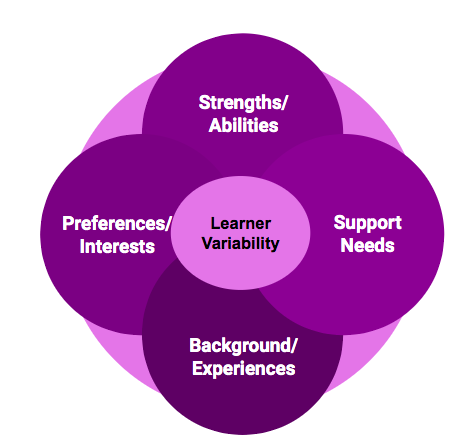
Second, I would offer multiple means of engagement by breaking longer lectures into shorter modules with interactive activities, reflection questions, and opportunities for peer discussion. The UDL On Campus resource highlights that engagement can be supported by offering choice, relevance, and collaboration (CAST, 2024).
Finally, I would redesign assessments to provide multiple means of action and expression. Rather than relying solely on timed quizzes, students could demonstrate learning through short written responses, presentations, discussions, or project-based tasks. This would reduce barriers for learners who experience test anxiety, require more processing time, or express their understanding better through alternative formats (CAST, 2024).
What I have learned from this experience is that educational design should not begin with the assumption that there is a single “normal” learner. Instead, variability should be treated as the starting point. When courses are designed with flexibility, choice, and accessibility in mind, more students can participate meaningfully and succeed without needing special accommodations later. Designing for variability benefits everyone, not just learners who are struggling.
References:
CAST (2024). CAST Universal Design for Learning Guidelines version 3.0. Retrieved from https://udlguidelines.cast.org
Universally Designed. (2023, May 24). Universal Design for learning – Universally designed. Universally Designed -. https://universallydesigned.education/universal-design-for-learning/